Why Do I Need a Lightning Protection System?
A single strike can destroy a building in seconds — here's how a properly designed system gives that energy a safe path to the ground instead.
The Real Cost of a Strike
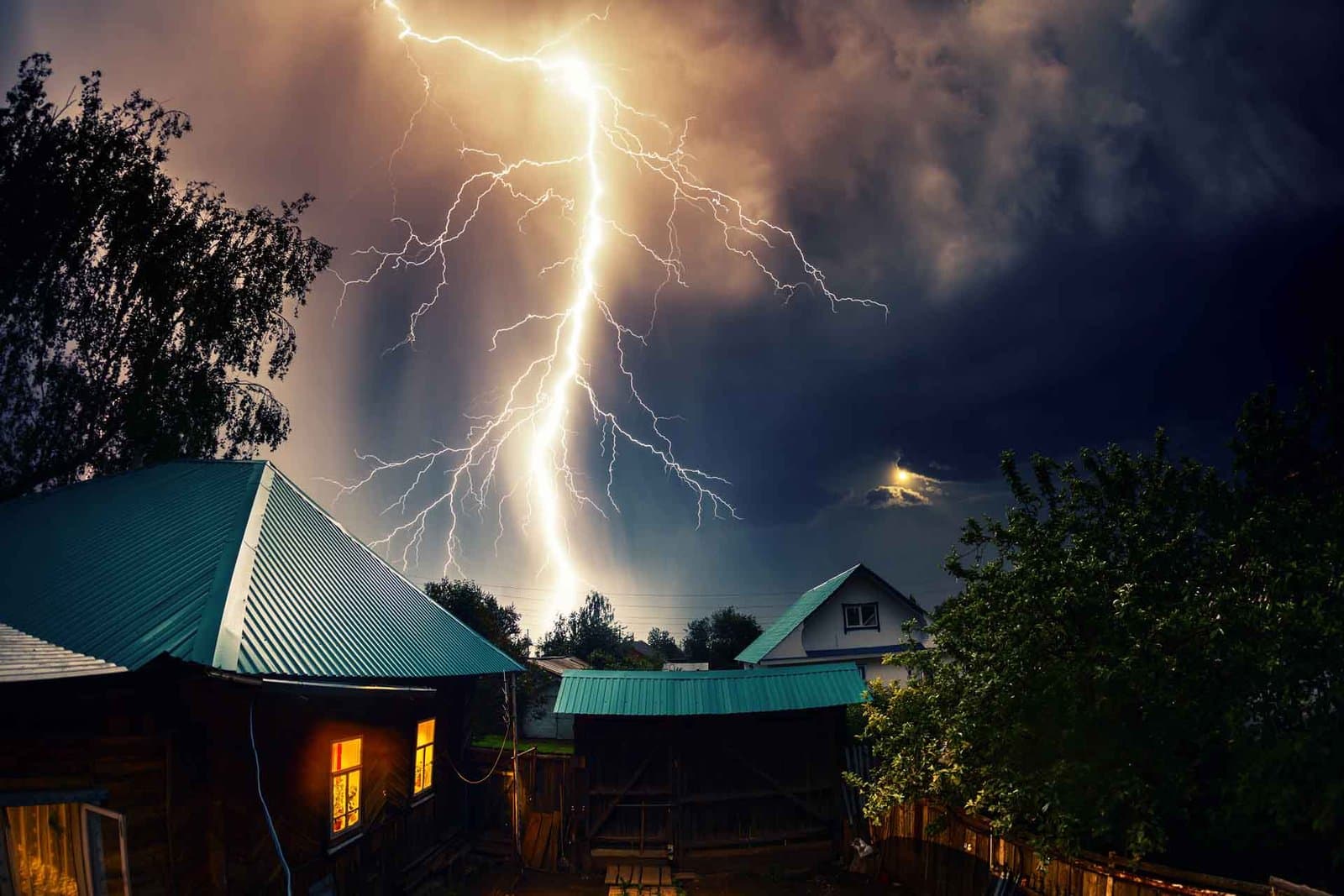
Lightning discharges an enormous burst of electrical energy in a fraction of a second, and when it hits an unprotected structure, the damage is rarely contained to just one thing. Building materials, wiring, and roofing can be destroyed outright, fires can start, and any electronics connected to the building's wiring are at risk. U.S. insurers paid out $1.65 billion in lightning-related homeowners insurance claims in 2025 alone, according to the Insurance Information Institute — a reminder that strikes are common enough to be a real financial risk, not a rare fluke.
How a Lightning Protection System Works
A lightning protection system doesn't stop lightning from striking a building — nothing can do that reliably. What it does is give the strike a low-resistance path to follow, intercepting the energy at the roofline and carrying it down and away from the structure into the earth, where it dissipates harmlessly instead of tearing through walls, wiring, or people.
The Core Components
A complete system is built from five parts working together: air terminals mounted at the building's high points to intercept a strike, main conductors that carry the energy down the structure, grounding electrodes (ground rods) that release it safely into the earth, bonding that connects nearby metal objects like water pipes and HVAC equipment to the grounding system to prevent dangerous side flashes, and surge protection devices that guard the building's electrical and electronic systems from the surge that travels through the wiring. Systems are typically designed around standards like NFPA 780 and UL 96A.
Residential and Commercial Buildings Both Need It
These same five components apply whether the building is a single-family home, a farm structure, or a commercial facility — what changes is the layout and number of air terminals and conductors needed to cover the roof properly. A qualified installer accounts for the building's height, roof shape, and surrounding terrain when designing the layout.
Getting It Installed Right
Because a poorly designed system can leave gaps in coverage, installation should be handled by an experienced lightning protection contractor rather than treated as a DIY project. RS Lightning Protection installs, inspects, and repairs lightning protection systems across Ohio, Pennsylvania, Delaware, Maryland, and West Virginia. Call 1-866-415-2231 to talk through what your property needs.
Need installation? See our installation service.